
Conditions We Treat
Knee Pain Treatment
Knee pain can make everyday activities such as walking, climbing stairs, exercising, or simply getting up from a chair uncomfortable. Whether your symptoms developed gradually or began after an injury, identifying the cause of your knee pain is the first step toward finding the right treatment.
At ReVive Orthopedics Spine & Sports Medicine, our orthopedic team evaluates knee pain caused by arthritis, sports injuries, meniscus and ligament injuries, inflammation, and other musculoskeletal conditions. We offer personalized treatment options ranging from conservative care and injections to surgery when appropriate.
Schedule an Appointment
Understanding Your Symptoms
What Causes Knee Pain?
The knee is a complex joint made up of bones, cartilage, ligaments, tendons, muscles, and other supporting structures. Pain can develop when any of these structures become injured, irritated, inflamed, or begin to deteriorate over time.
Some knee problems develop suddenly after a sports injury, fall, or accident, while others develop gradually from arthritis, repetitive activity, or age-related changes. Because several different conditions can produce similar symptoms, an orthopedic evaluation can help determine what is actually causing your pain.
Signs & Symptoms
Common Knee Pain Symptoms
Knee conditions can cause different symptoms depending on which structures are affected and whether the problem developed from an injury or gradually over time.
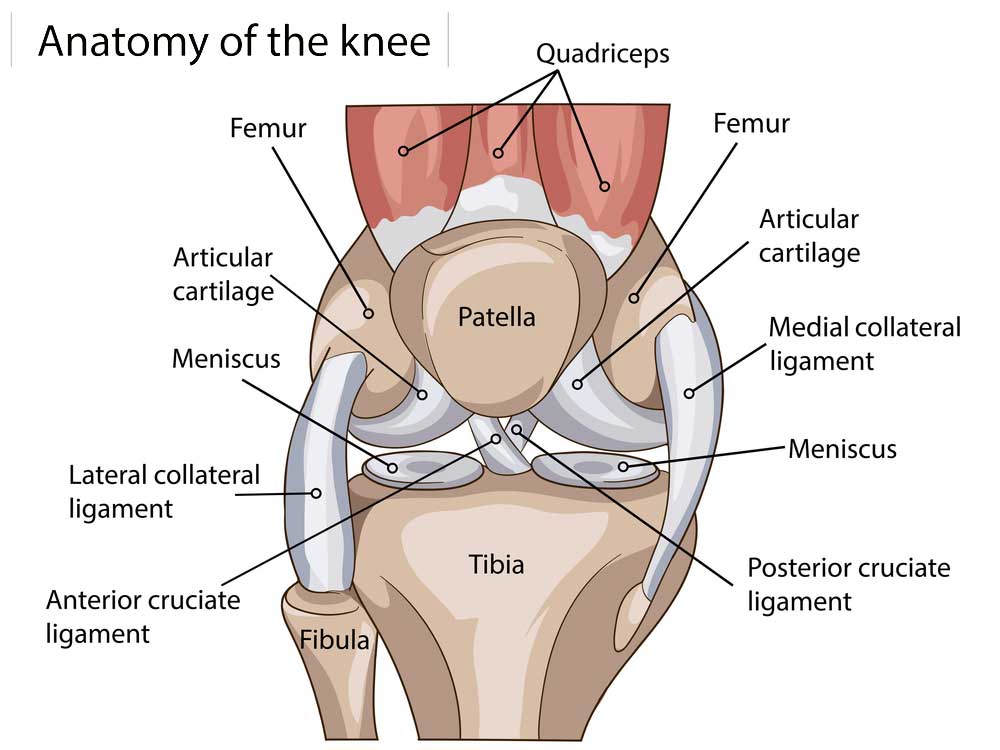
Common Conditions
Conditions That Can Cause Knee Pain
Knee pain can result from arthritis, injury, overuse, or damage to the structures that support and stabilize the knee.
- Knee osteoarthritis
- Meniscus tears
- ACL and other ligament injuries
- Patellofemoral pain
- Tendinitis
- Bursitis
- Cartilage injuries
- Sports injuries
- Sprains and strains
- Previous knee injuries or trauma
Diagnosis
Finding the Cause of Your Knee Pain
Your orthopedic evaluation begins with a review of your symptoms, activity level, medical history, and any recent or previous knee injuries. Your provider will examine the knee for tenderness, swelling, range of motion, strength, stability, and other signs that may help identify the source of your symptoms.
Depending on your symptoms and examination, diagnostic testing may include X-rays, MRI, or other imaging to evaluate the bones, cartilage, meniscus, ligaments, tendons, and other structures of the knee.
Treatment Options
Personalized Knee Pain Treatment
The right treatment depends on the cause of your knee pain, the severity of the condition, your activity level, and how your symptoms are affecting your daily life. Whenever appropriate, treatment may begin with conservative options before progressing to more advanced procedures or surgery.
Non-Surgical Options
Knee Injections for Pain & Arthritis
For certain knee conditions, injections may be recommended as part of a non-surgical treatment plan. Depending on your diagnosis, options may include corticosteroid injections, hyaluronic acid injections, or regenerative treatments such as platelet-rich plasma (PRP).
Hyaluronic acid injections, sometimes called knee gel injections, may be considered for certain patients with knee osteoarthritis. Your provider can determine whether an injection is appropriate based on your symptoms, examination, imaging, and previous treatment.
Advanced Treatment
When Is Knee Surgery Considered?
Surgery may be considered for certain knee injuries or when advanced arthritis causes persistent pain and loss of function despite appropriate non-surgical treatment.
The type of surgery depends on the underlying condition. Your orthopedic surgeon will consider your examination, imaging, activity level, overall health, and previous treatments when determining whether a surgical procedure is appropriate.
Joint Replacement
Knee Replacement for Advanced Arthritis
For patients with advanced knee arthritis, joint replacement may be considered when pain and stiffness significantly interfere with walking, daily activities, sleep, or quality of life and conservative treatments are no longer providing adequate relief.
Knee replacement surgery replaces damaged joint surfaces with artificial components designed to restore smoother joint movement. Your orthopedic surgeon can determine whether joint replacement is appropriate based on the severity of your arthritis and your individual needs.
A Team Approach
From Conservative Care to Spine & joint Surgery
ReVive Orthopedics takes a collaborative approach to care. Depending on your symptoms and diagnosis, you may be evaluated by a general orthopedic physician, physiatrist, interventional pain specialist, spine and joint surgeon, nurse practitioner or physician assistant.
When possible, treatment begins conservatively. If additional intervention becomes necessary, our team offers advanced pain management, minimally invasive procedures, and surgical options so your care can progress based on your individual needs.

Our Specialists
Meet the ReVive Care Team
Our orthopedic team works together to determine the most appropriate next step in care based on your diagnosis, symptoms, imaging, and individual goals.
Dr. Shevin Pollydore
Neck to Toe Orthopedic Care
Pain Management
Sports Medicine
Spine Procedures
Dr. Praveer Srivastava
Hip & Knee Surgeon
Total Joint Replacement
General Orthopedics
Dr. Matthew Igbinigie
Orthopedic Spine Surgeon
General Orthopedics
Spine Surgery
Physician Assistants
Provide Comprehensive Orthopedic Evaluations & Care
Related Conditions
Conditions Related to Knee Pain
Ready to Find the Cause of Your Knee Pain?
Schedule an orthopedic or spine evaluation with ReVive Orthopedics Spine & Sports Medicine and take the next step toward a personalized treatment plan.
Schedule an Appointment